
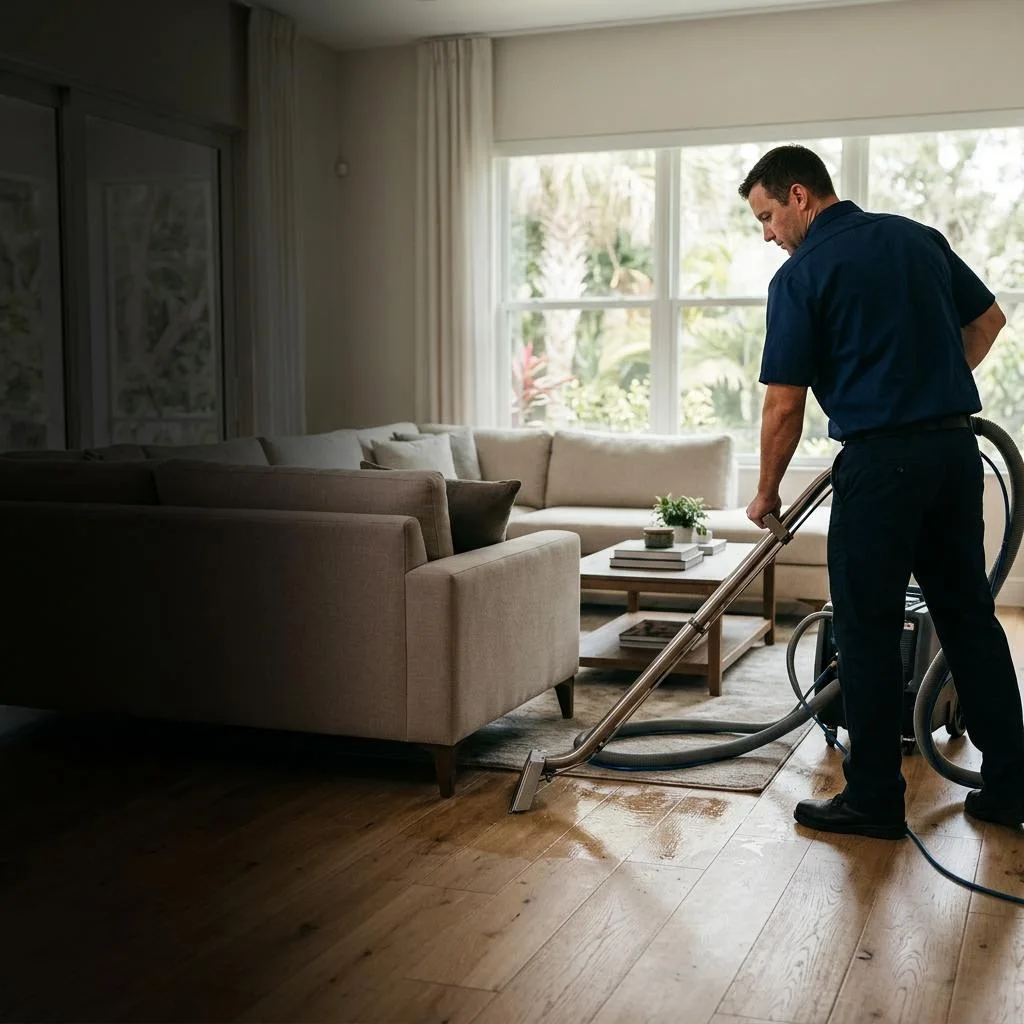
Structural drying is a controlled response to moisture in building materials, not simply placing fans in a room. The plan depends on source, contamination, access and whether the affected materials are suitable for drying.
Start with the assembly
A floor can include a finish, adhesive, underlayment and subfloor. A wall can conceal insulation and other layers. Ask which materials were evaluated and where access was limited. A visible wet patch alone cannot define every affected layer.
Connect equipment to a purpose
Appropriate air movement and humidity control can support drying under suitable conditions. Placement and operation should follow the project plan; do not move or switch equipment off without asking. Contamination may require a different approach before ordinary air movement is appropriate.
Use progress information for decisions
Ask how observations and moisture checks are compared over the project, what remains uncertain and what must happen before repair. No single surface reading or fixed number of days proves every assembly is ready. Source repairs and reconstruction may be separate work.