
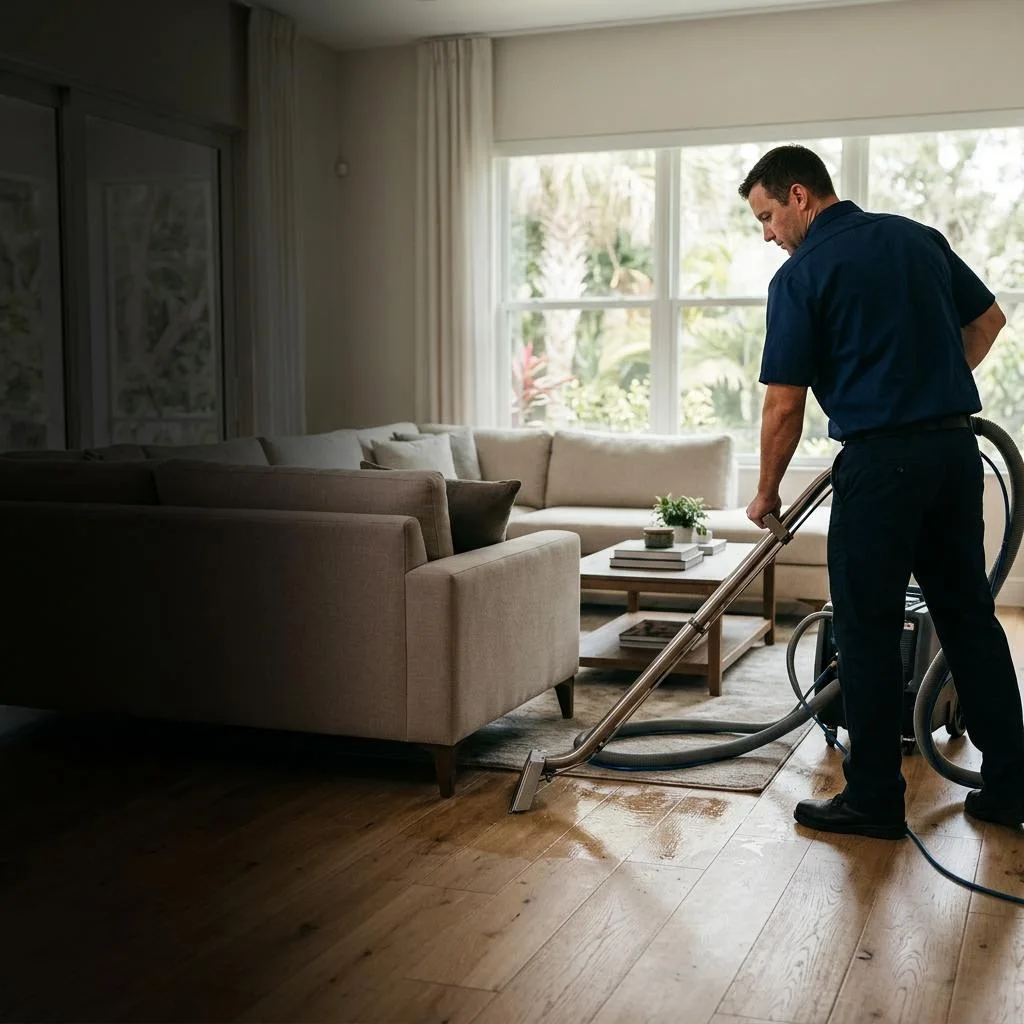
The first step is understanding the damage.
Indoor flooding can come from a plumbing failure or water entering from outside. Those situations are not interchangeable. The source affects safety precautions, material decisions and cleanup planning. Keep people and pets away until electrical, contamination and structural concerns have been addressed.
Common causes and warning signs
Tell us whether the water entered during rain, rose from outside, came from a broken line or backed up from a drain. Outdoor floodwater may contain hazards you cannot see. Even clear-looking water should not be assumed safe. A damaged roof, active plumbing fault or public drainage issue may require a different professional or agency to address the source.
How the work is planned
Safe access and source evaluation come first. Once appropriate, the plan considers accessible water removal, the condition of affected materials and drying needs. Contaminated materials may require different handling from a simple supply-water leak. Decisions should be based on the actual event rather than a universal flood-cleanup checklist applied without assessment.
Materials, moisture and equipment decisions
Porous finishes, wall bases and floor layers can be affected beyond the visible water line. Do not handle or attempt to salvage contaminated porous items yourself. Keep food, medicines and children’s belongings away from questionable water and seek appropriate public-health guidance about items that may be unsafe.
What affects the timeline
An active source, affected layers, contamination and access can change the sequence and duration. Removing visible water does not mean drying is complete. Ask how progress will be reviewed, which areas remain unverified and what must happen before repair. Plumbing, roofing and reconstruction may require separate coordination; we do not promise a fixed number of days.
What affects scope and price
The affected area, materials, concealed moisture and necessary precautions influence the scope. Ask for written tasks, exclusions, change authorization and payment responsibilities. A request is not a quote, and a claim number does not guarantee insurance payment. We do not publish invented local prices or assume extraction, drying and finish repairs are all included in one amount.
Before an assessment
Do not walk through floodwater to reach a switch, appliance or shutoff. Stay away from unstable surfaces and damaged utility systems. Use qualified help for electrical evaluation. Document the entry point and affected spaces only when safe, and follow local emergency instructions after severe weather.
If safe, prepare a list of affected spaces and when you discovered the water. You do not need to identify every wet material before asking for guidance. Mention children, pets or access limitations without submitting private medical information. Keep safe access routes clear and wait for situation-specific instructions before moving belongings or reconnecting equipment.
Documentation and insurance
Safe photographs, affected-area notes and mitigation records may help you explain the event to your insurer. Ask which documentation applies to the work performed. The insurance company decides coverage under the policy and circumstances; we do not guarantee approval, reimbursement or any particular amount. Keep source-repair information and relevant receipts.
Scope and next steps
Flood cleanup does not imply flood-insurance coverage or a guarantee to save every material. Outside flooding may be treated differently from a plumbing leak under insurance. Discuss the event with your carrier and confirm the work scope separately.
Residential coverage in Central Florida
We serve the confirmed communities and ZIP codes in West, North and East Orlando. Check the full list on Service Areas. English and Spanish support and 24/7 emergency availability are confirmed. This website’s form saves confirmed requests; alerts are queued only for registered staff devices, if any, with no delivery guarantee and no crew dispatch. For immediate danger, call emergency services.
A practical next step
Describe the source, affected rooms and property ZIP code. Do not enter an unsafe area to gather details.
Frequently asked questions
Is outside floodwater considered clean?
Do not assume it is. It can contain contamination and physical hazards even when it looks clear. Avoid contact and follow professional safety guidance.
Can I use fans after a flood?
Not before the source and contamination concerns are assessed. Air movement can be inappropriate in a contaminated area.
Will homeowners insurance cover flooding?
Coverage varies by event and policy. Outside flooding is often handled differently from plumbing losses. Ask your insurer; no coverage promise is made here.
Should I remove wet flooring myself?
Do not begin removal in an unsafe or potentially contaminated area. Material handling and access should be assessed first.
Does cleanup include fixing drainage outside?
Not automatically. Drainage, roof or plumbing corrections may require separate qualified professionals. Confirm what is and is not in the mitigation scope.
What should I photograph?
If safe, capture the entry point, affected rooms and visible water marks. Do not enter floodwater or unstable areas to collect photos.
Related services
Helpful guides
What happens next?
We will use the details you provide to understand the situation, discuss the next step and determine what can be assessed. If the source of the water is still active, a qualified plumber, roofer or other trade may also be needed to address it.