
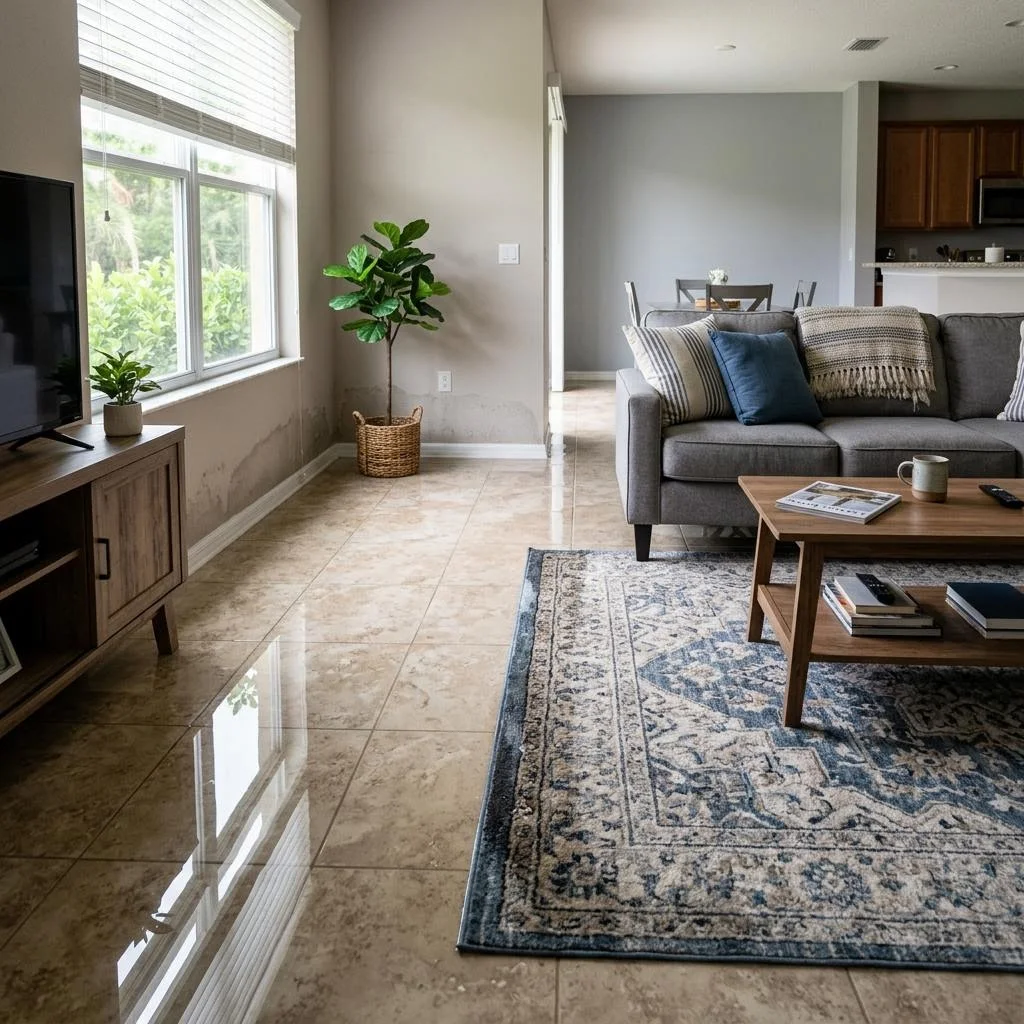
The first step is understanding the damage.
A burst pipe can release water into floors, wall spaces and ceilings before the source is discovered. If the shutoff is safely accessible, stop the supply. Do not cross water near electrical equipment to reach it. A licensed plumber may be needed to repair the break; mitigation addresses the resulting water damage.
Common causes and warning signs
Supply-pipe failures and broken connections can affect areas beyond the room containing the break. An upstairs leak may appear as a downstairs ceiling stain. Record when you discovered the event, whether the supply is stopped and which spaces show water. Do not assume the visible ceiling mark shows the full affected area.
How the work is planned
After source control and safety review, assessment identifies where water traveled. Accessible water removal is followed by moisture evaluation and drying planning. Water behind trim or below flooring needs consideration even if the visible spill has been wiped up. Explain any repairs already performed so the mitigation plan can distinguish the source repair from the damage response.
Materials, moisture and equipment decisions
Walls, insulation, flooring and cabinetry may require different decisions. Do not puncture a bulging ceiling to release water or open a wet wall without professional assessment. Drying methods depend on source conditions, material state and access; plumbing repair by itself does not establish that surrounding assemblies are dry.
What affects the timeline
An active source, affected layers, contamination and access can change the sequence and duration. Removing visible water does not mean drying is complete. Ask how progress will be reviewed, which areas remain unverified and what must happen before repair. Plumbing, roofing and reconstruction may require separate coordination; we do not promise a fixed number of days.
What affects scope and price
The affected area, materials, concealed moisture and necessary precautions influence the scope. Ask for written tasks, exclusions, change authorization and payment responsibilities. A request is not a quote, and a claim number does not guarantee insurance payment. We do not publish invented local prices or assume extraction, drying and finish repairs are all included in one amount.
Before an assessment
Move out from under a sagging ceiling. Avoid wet outlets, switches and appliances. If you can safely do so, make a note of the main shutoff location for the responding professionals. Do not turn water back on to demonstrate the leak. Keep people and pets out of the affected work area.
If safe, prepare a list of affected spaces and when you discovered the water. You do not need to identify every wet material before asking for guidance. Mention children, pets or access limitations without submitting private medical information. Keep safe access routes clear and wait for situation-specific instructions before moving belongings or reconnecting equipment.
Documentation and insurance
Safe photographs, affected-area notes and mitigation records may help you explain the event to your insurer. Ask which documentation applies to the work performed. The insurance company decides coverage under the policy and circumstances; we do not guarantee approval, reimbursement or any particular amount. Keep source-repair information and relevant receipts.
Scope and next steps
Pipe repair, mitigation and rebuilding are separate scopes unless expressly agreed otherwise. Insurance treatment depends on your policy and the facts of the event. We do not guarantee an insurer’s decision or a fixed drying duration.
Residential coverage in Central Florida
We serve the confirmed communities and ZIP codes in West, North and East Orlando. Check the full list on Service Areas. English and Spanish support and 24/7 emergency availability are confirmed. This website’s form saves confirmed requests; alerts are queued only for registered staff devices, if any, with no delivery guarantee and no crew dispatch. For immediate danger, call emergency services.
A practical next step
Describe the source, affected rooms and property ZIP code. Do not enter an unsafe area to gather details.
Frequently asked questions
Should I shut off the main water supply?
Only if you can reach it safely from a dry location. If doing so involves electrical or structural risk, stay clear and seek qualified help.
Do you repair the broken pipe?
This page describes water damage mitigation, not a plumbing service promise. A licensed plumber may be needed to locate and repair the source.
Why is the ceiling below the leak important?
Water may move through floor and ceiling assemblies. Describe any stains or sagging below, but do not approach a potentially unstable ceiling.
The plumber finished; is the home dry now?
Not necessarily. Repairing the source stops further release but does not remove moisture already retained in building materials.
Can a slow pipe leak also need mitigation?
Yes. Duration and the path through materials matter as well as visible water volume. Describe any recurring stains or dampness during assessment.
What records should I keep?
Keep safe photographs, discovery time, plumbing repair information and relevant receipts. Ask your insurer about reporting requirements and needed documentation.
Related services
Helpful guides
What happens next?
We will use the details you provide to understand the situation, discuss the next step and determine what can be assessed. If the source of the water is still active, a qualified plumber, roofer or other trade may also be needed to address it.