
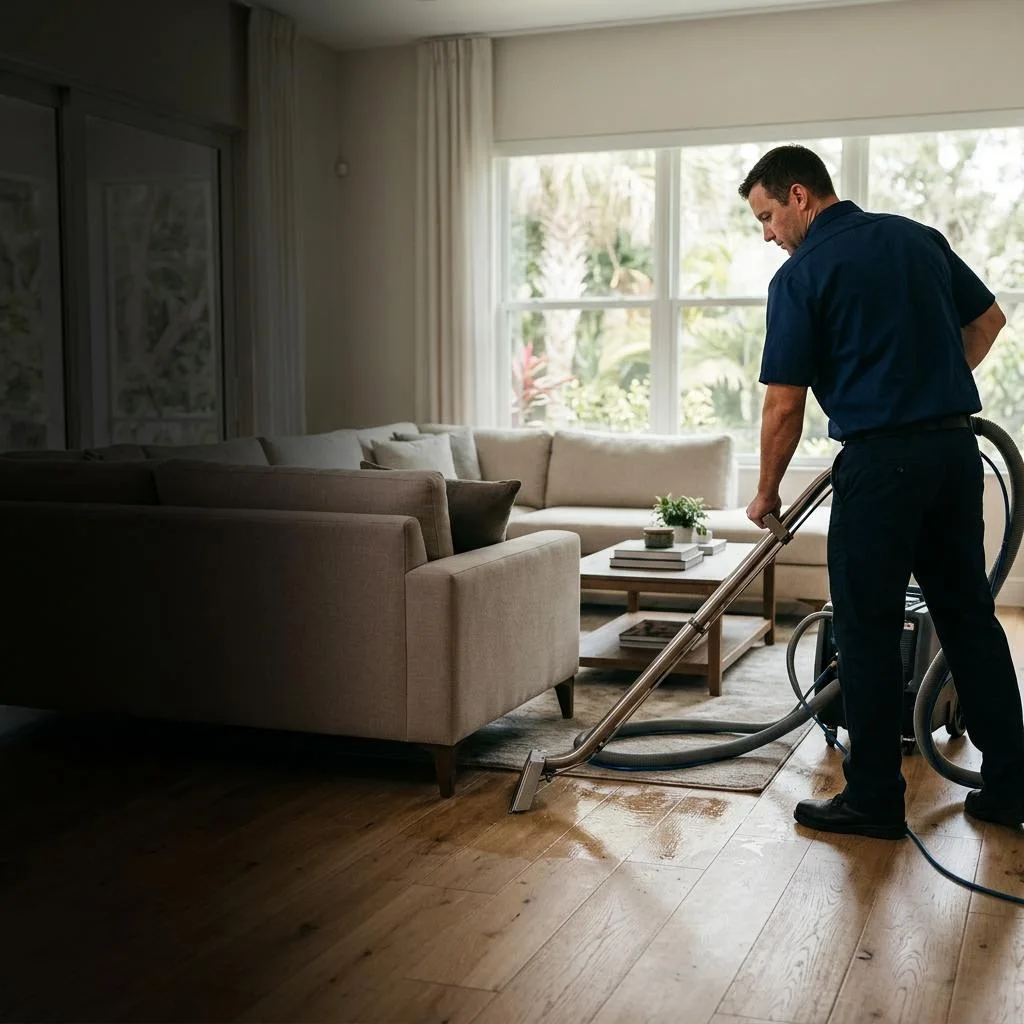
The first step is understanding the damage.
Start with safety, not cleanup. Move people and pets away from the water and do not enter an area where electricity, contaminated water or structural damage may be involved.
Stop an active water supply only if the shutoff is safely accessible. Do not reach through water to unplug an appliance or enter a wet room to operate an electrical panel.
Avoid a sagging ceiling and do not puncture it yourself. Keep away from sewage or outside floodwater. Do not use a household vacuum to remove water.
Photograph visible damage from a safe position. Note when you discovered it, the suspected source and the rooms affected. Save relevant receipts and contact your insurer about reporting requirements.
Arrange assessment of hidden moisture as well as visible water. A surface can look dry while flooring layers or wall cavities remain wet.
Find a safer next step.
Choose what you can see from where you are standing. Nothing is sent or saved. This guide cannot diagnose your situation or confirm that a space is safe.
Suggested next steps
- If you cannot identify the source, do not investigate by entering water or opening walls. Describe what you see and where.
- If it is safe, take photos from a distance and note when you found the water.
No danger sign selected does not mean the area is safe. Hidden electrical, structural or contamination risks can exist.
A request does not guarantee dispatch or an arrival time.
A practical next step
Read the guidance for your water source, then describe the affected rooms in a request.
Related services
Helpful guides
Need help now?
Send the essentials to record your request.
Confirmed requests are saved. Alerts are queued only for registered staff devices, if any; delivery is not guaranteed. This is not a crew dispatch or arrival confirmation. For immediate danger, call emergency services.