
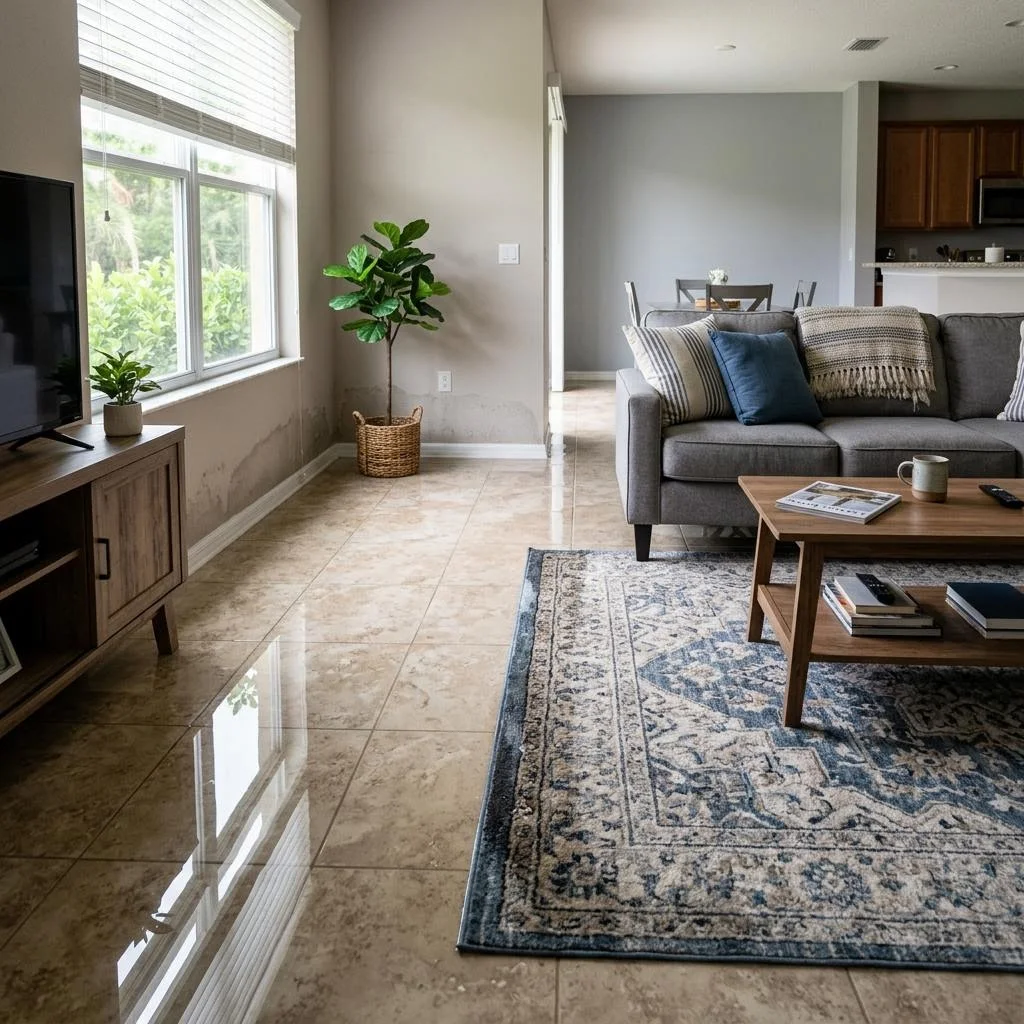
A puddle in front of the dishwasher may be the first thing you see, but it may not be the only wet area. Water can run beneath the appliance, along a cabinet base or into a flooring seam. Start by keeping people away from the wet area. Do not run another cycle to see whether it happens again.
Stop using the appliance without entering a hazard
If you can reach the normal controls from a dry, safe position, stop the dishwasher. Do not reach behind it, unplug a wet cord or touch a wet outlet. Shut off a clearly identified water supply only if it is safely accessible. If water is near electrical equipment, leave the area and arrange qualified help. A leaking dishwasher needs an appliance technician or plumber to address the source; water cleanup does not repair a failed hose, valve or connection.
Look beyond the puddle, but leave the cabinets in place
From a dry area, look for a darkened cabinet edge, swollen trim, a change at a floor seam or water appearing at the other end of the kitchen. Check whether the adjoining room has a visible change, without stepping into water or shifting heavy furniture. These observations help describe the footprint. They do not show how wet the hidden layers are. Do not pry off a toe kick, pull out the appliance or drill into a cabinet to investigate. Those steps can expose electrical connections, damage plumbing or disturb materials that need a different approach.
Write a short timeline while the details are fresh
Record when you last used the dishwasher, when you noticed water and whether the appliance was running at the time. If you know that the supply was shut off, note when. Take photographs from safe positions: one wide view of the kitchen, then closer views of visible changes. Include the adjoining room if water reached it. Say when you are unsure. “Found water this morning” is more useful than guessing that a leak started overnight. Keep the appliance repair findings and receipts with the same notes.
Ask what happened under the floor and cabinet base
A dry tile face or a water-resistant plank does not settle the question of moisture underneath. Tell the person assessing the damage what flooring you have, whether it was installed over another floor and whether the cabinets or floor have been repaired before. Ask which materials could be checked, which could not and what findings support the proposed drying plan. Cabinet bases, wall edges and layered flooring may need different decisions. Removal is not automatic, and neither is saving every material. The decision should follow the condition, access and water involved.
Keep source repair separate from drying completion
Once the dishwasher stops leaking, the room may still contain wet material. Ask who is handling the appliance repair and who is assessing the building materials. Before a replacement appliance is installed or a cabinet panel is closed, clarify whether the affected area is ready and what remains unresolved. Avoid starting household fans around suspected mold or contaminated water. Do not connect drying equipment to a wet outlet or run an extension cord across the wet kitchen.
Before you approve the work
Ask for a scope that identifies the affected rooms, proposed equipment, any planned material removal and how changes will be explained. Check whether appliance repair, cabinet work and new flooring are included or separate. If you are reporting the event to your insurer, ask the carrier what records it wants; a contractor cannot promise coverage. For homes in Winter Garden, Lake Mary, Oviedo and the other communities we serve, describe the leak and visible damage when requesting help. An online request records those details; it is not a substitute for emergency services when there is immediate danger.