
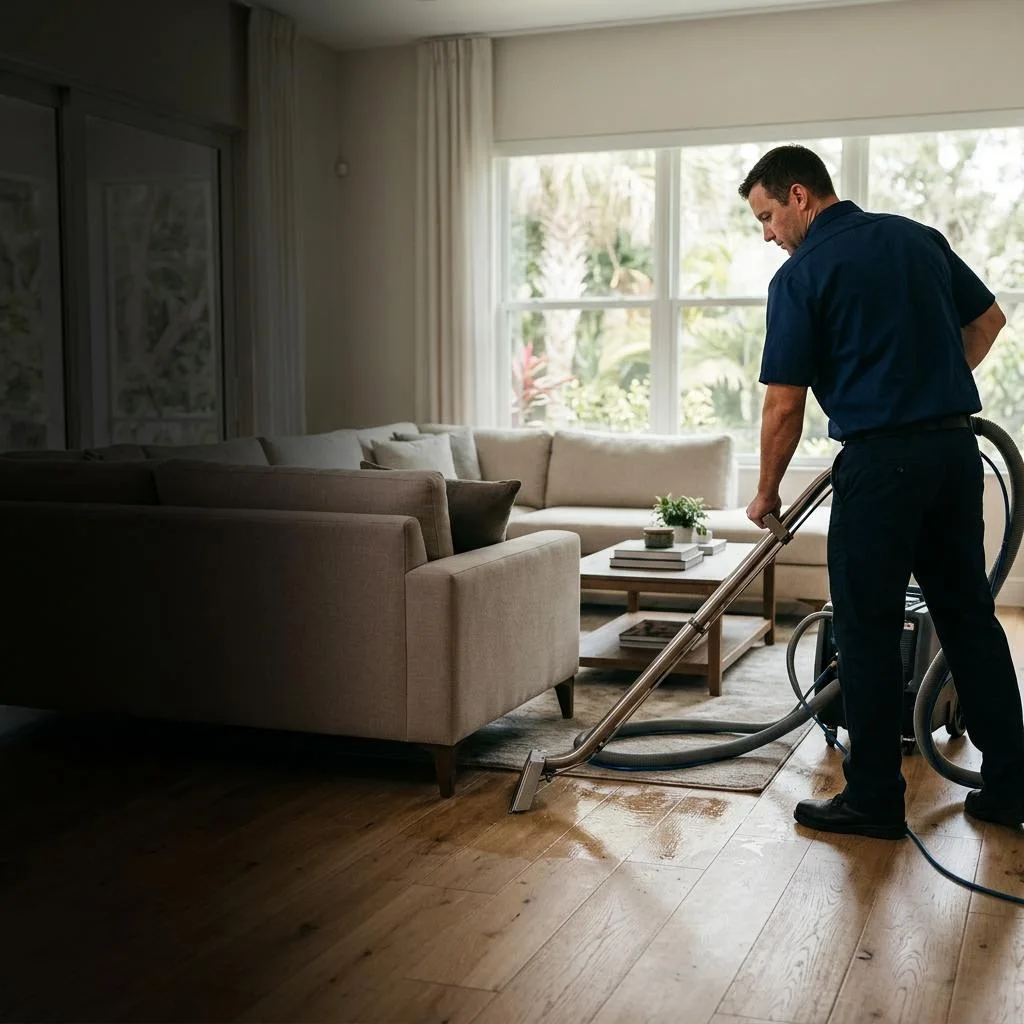
The carpet feels better after you blot up a leak. Does that mean the room is dry? Not necessarily. The carpet face, backing, cushion and floor underneath are separate parts of the problem. What happens next depends on the water source, how far it spread and the condition of those layers—not just how the carpet feels underfoot.
First, work out what water reached the carpet
Tell the assessor whether the water came from a supply pipe, an appliance, a toilet or outside the home. Explain what you actually know, not what the water looks like. Clear water is not proof of safety, and time or contact with other materials can affect conditions. Keep children and pets away from the wet room. Sewage, outside floodwater, suspected mold or an uncertain source calls for qualified assessment before anyone starts ordinary cleaning or air movement. Do not use a household vacuum to pick up water.
Why the surface can be misleading
Blotting and surface evaporation may change the top of the carpet without addressing the cushion beneath it. Water may also reach the subfloor, tack-strip area, baseboard or an adjoining closet. Thick furniture and stored boxes can hide the edge of the wet area. Point out where the water first appeared and where you later noticed dampness. Do not pull the carpet back yourself: tack strips are sharp, wet carpet is heavy and the layers underneath may need controlled handling.
Saving the carpet and saving the padding are different questions
A decision about one layer does not automatically apply to every layer. The water involved, material condition, ability to clean and dry it, installation method and access all matter. Ask which materials the proposed scope keeps and which it removes, and why. Avoid accepting either “all carpet can be saved” or “all wet carpet must go” without a reason tied to your room. If replacement is proposed, ask how the underlying floor will be assessed before new cushion or carpet is installed.
What you can prepare without disturbing the room
From a safe, dry location, write down the affected rooms and any closets or adjacent hallways that may be involved. Photograph visible changes, furniture contact points and the water source if accessible. Note previous leaks or existing carpet damage separately so the record is clear. Tell the provider about fixed furniture or limited access before the visit. Do not drag waterlogged furniture through other rooms or roll up a wet rug to store in a closet. Ask how belongings will be handled under the proposed scope.
Questions to ask during drying
Ask what is being checked beneath the carpet, how the wet footprint was identified and whether any area remains inaccessible. Find out which equipment must stay in place and whom to contact if it stops. A reduction in smell or a more comfortable room is not, on its own, a completion test. Ask how progress and the condition of the floor underneath will be explained. If new dampness appears near a doorway or closet, report it rather than assuming it is part of normal drying.
Before furniture and flooring go back
Confirm that the source has been addressed, the retained materials have been evaluated and any remaining repair decisions are documented. Ask whether the carpet still needs cleaning, reinstallation or replacement; those tasks should be clear in the agreement. Do not cover a damp area with a new rug or replace padding simply because the top looks ready. For a residential leak in Winter Park, Windermere or another served community, include the rooms, water source and carpet condition in your request. That information helps explain the situation without guessing what can be saved before assessment.