
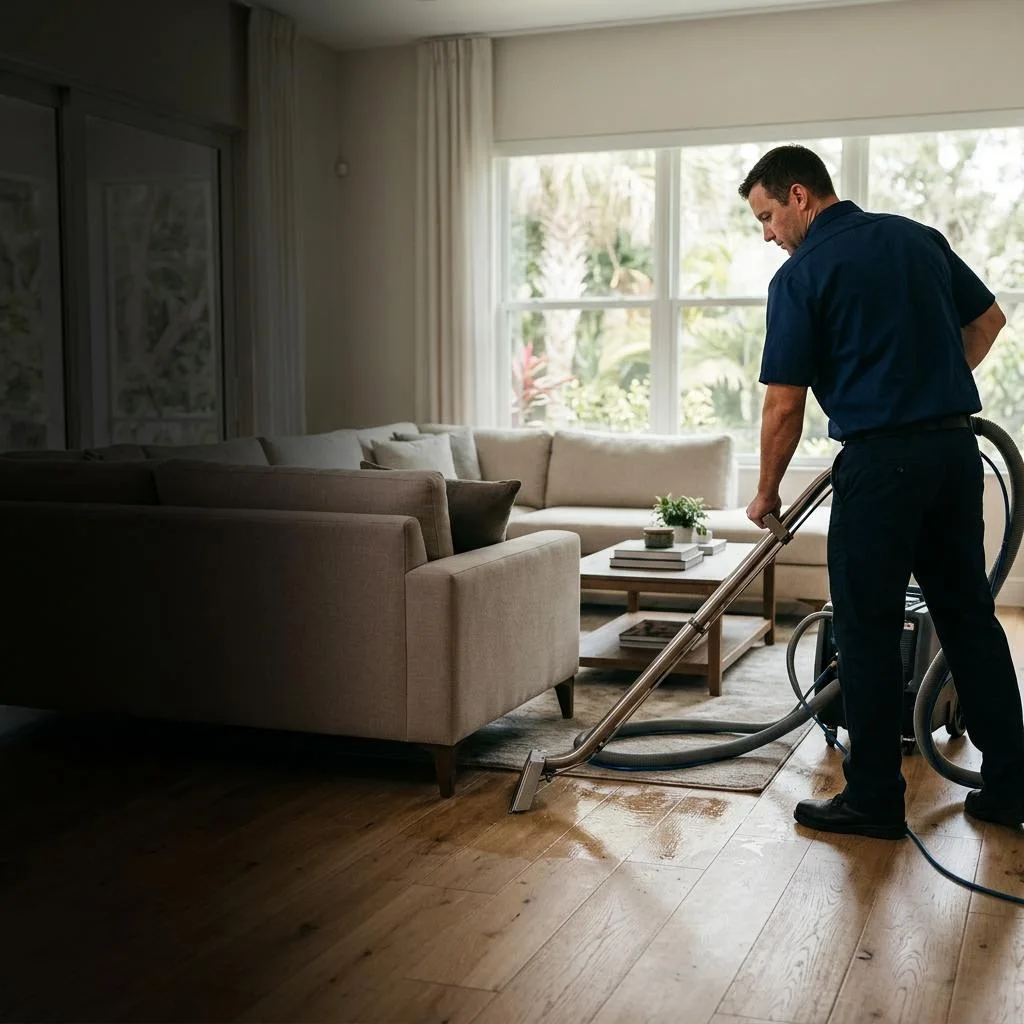
Sometimes a leak affects one room; sometimes it affects the only bathroom, the kitchen or a route through the house. Whether you can stay is a safety and access question, not just a question of putting up with fan noise. No website can clear a water-damaged home for occupancy. Ask for advice based on the actual conditions before making plans.
Start with reasons to keep out
Water near electrical fixtures, a sagging ceiling, unstable material, sewage, floodwater or suspected mold changes the discussion. Keep away from the affected space and seek the appropriate qualified help. Follow emergency instructions if authorities restrict access. Do not walk through a hazardous room just because it is the shortest way to a bedroom. If anyone has symptoms or a health concern, seek medical guidance; a mitigation contractor is not the person to decide what exposure is safe for that individual.
Ask for a room-by-room access plan
Before work starts, ask which rooms are off limits, how the work area will be separated and which route remains safe for entering and leaving. Discuss whether you can still use the kitchen, bathroom and sleeping areas. A single affected room can still interrupt daily life if it blocks an essential route or utility. Find out whether the access plan may change when materials are opened or removed. Do not cross a barrier, move protective sheeting or enter a restricted area to retrieve an item without checking first.
Plan around equipment, not just noise
Drying equipment may need to run according to the agreed plan, and cords or hoses can create trip hazards if routes are not managed. Ask the provider to explain safe walking paths, electrical arrangements and what to do if equipment stops. Do not cover a machine, stack belongings against it or connect other appliances to its power arrangement. If the noise prevents sleep or a cord blocks the only safe path, raise that problem with the provider. Switching everything off overnight without discussion can interrupt the drying plan.
Talk about children, pets and practical needs
Explain who lives in the home and any access needs before the equipment is placed. Ask how children and pets will be kept away from the work area, materials and cords. A closed door alone may not be a workable plan for a curious child or an animal that can open it. Arrange a separate place for food, bedding and essential belongings when necessary. If someone works from home, ask which space remains usable rather than assuming a desk in an adjoining room is outside the affected area.
Separate living arrangements from insurance assumptions
If staying elsewhere seems necessary, ask your insurer about the policy’s requirements before assuming accommodation or meal costs will be reimbursed. Keep receipts and the work-related information the carrier requests. A contractor can explain the observed conditions and proposed work, but cannot decide policy benefits or approve a hotel stay on the insurer’s behalf. Ask what documentation of restricted access or interrupted utilities is available. Do not delay leaving an immediate hazard while waiting for an answer about payment.
Agree on when the plan will be reviewed
Ask when you will receive the next update, how to report a new leak or equipment problem and what conditions could change the access decision. Before using a room again, clarify what has been completed, what remains restricted and whether repair work is still pending. A room may be dry enough for the next stage yet not ready for ordinary use because materials have been removed or other work remains. When requesting residential help in Lake Nona, Clermont or another served community, mention any essential room or exit affected. That detail matters more than a guess about how many days you can remain at home.