
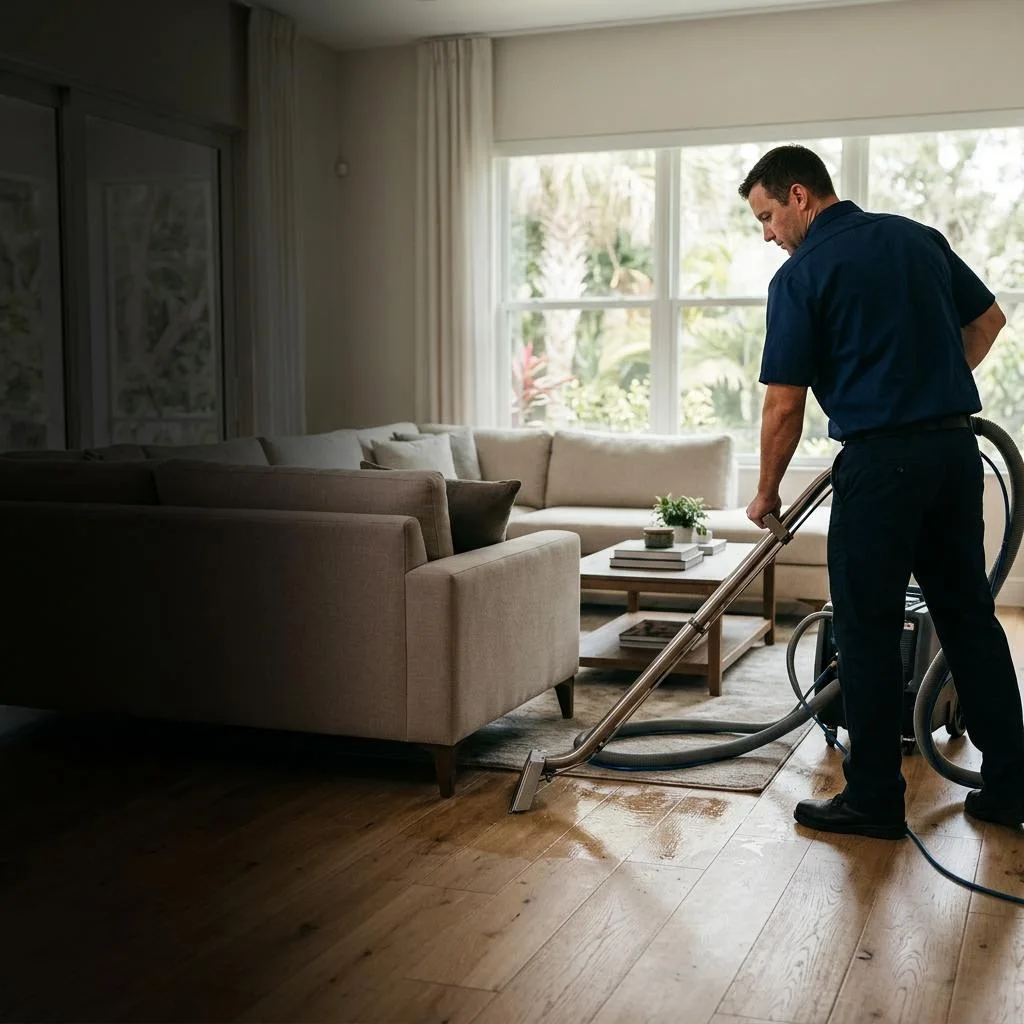
Prompt source control and appropriate drying help address the damp conditions that support mold growth. No website or drying timeline can guarantee that mold will not occur, and visible growth should not be disturbed casually.
Start with the moisture problem
A repaired leak can leave damp floor layers, trim or wall cavities. Addressing the source without evaluating retained moisture can leave the underlying condition unresolved. Ask what was assessed, what could not be accessed and whether further decisions are needed before repairs.
Avoid improvised contamination cleanup
Do not aim fans at suspected mold or sewage contamination before assessment. Avoid cutting into affected assemblies or mixing cleaning chemicals. The appropriate handling of growth or contaminated porous materials can differ from ordinary water removal.
Use a qualified specialist when indicated
Ask about applicable qualifications and licensing for any proposed mold assessment or remediation. Rapid Dry’s website does not claim a verified mold-remediation license or advertise a dedicated mold-remediation service. Water mitigation information should not be confused with that separate scope.
Follow credible safety guidance
EPA flooded-home guidance explains potential hazards and health precautions. Do not delay a qualified assessment because a surface looks dry. If someone has health concerns after exposure, seek advice from a medical professional rather than relying on contractor guidance.