
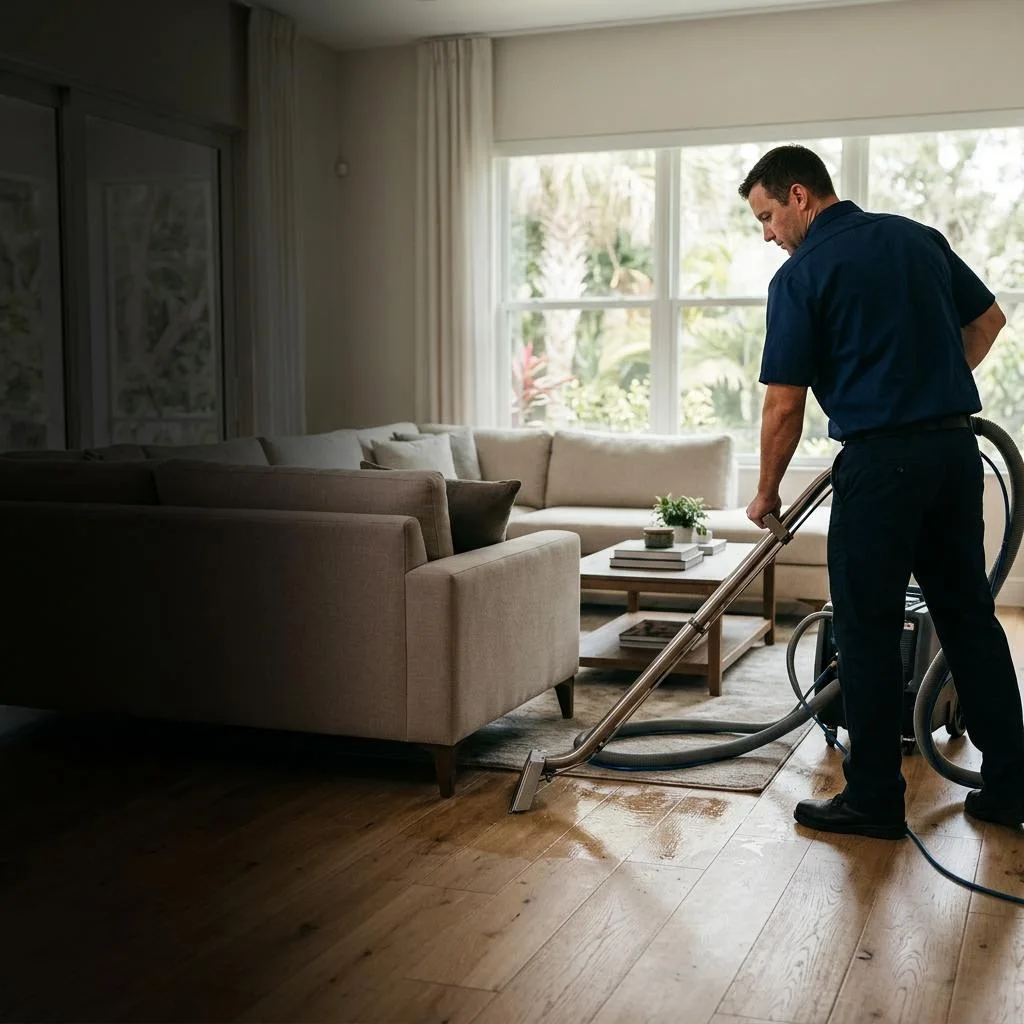
A water-resistant or waterproof surface label does not establish that the floor assembly beneath it is dry after a leak. Water can reach edges, transitions and underlying layers, depending on the construction and event.
Look beyond the surface label
The plank, seams, underlayment and subfloor are different parts of the assembly. Product-specific requirements vary. Do not assume that a surface claim applies to the entire floor or proves that water cannot be trapped underneath.
Report the path of the water
Note where water entered, which rooms connect and whether edges, trim or transitions changed. Keep any known flooring product information for the assessor or installer. Avoid lifting planks yourself in an unsafe or potentially contaminated area.
Drying and reuse are separate decisions
Whether materials can be dried or reused depends on their condition, contamination and the relevant product or installation requirements. A dry top surface is not a sufficient basis for covering a damp assembly. Ask about the findings and any access limitations.
Plan repairs after assessment
Coordinate moisture findings with the flooring professional before replacement or reinstallation. Keep records of source repair and mitigation. No general article can guarantee that a specific floor is salvageable or that insurance will cover replacement.