
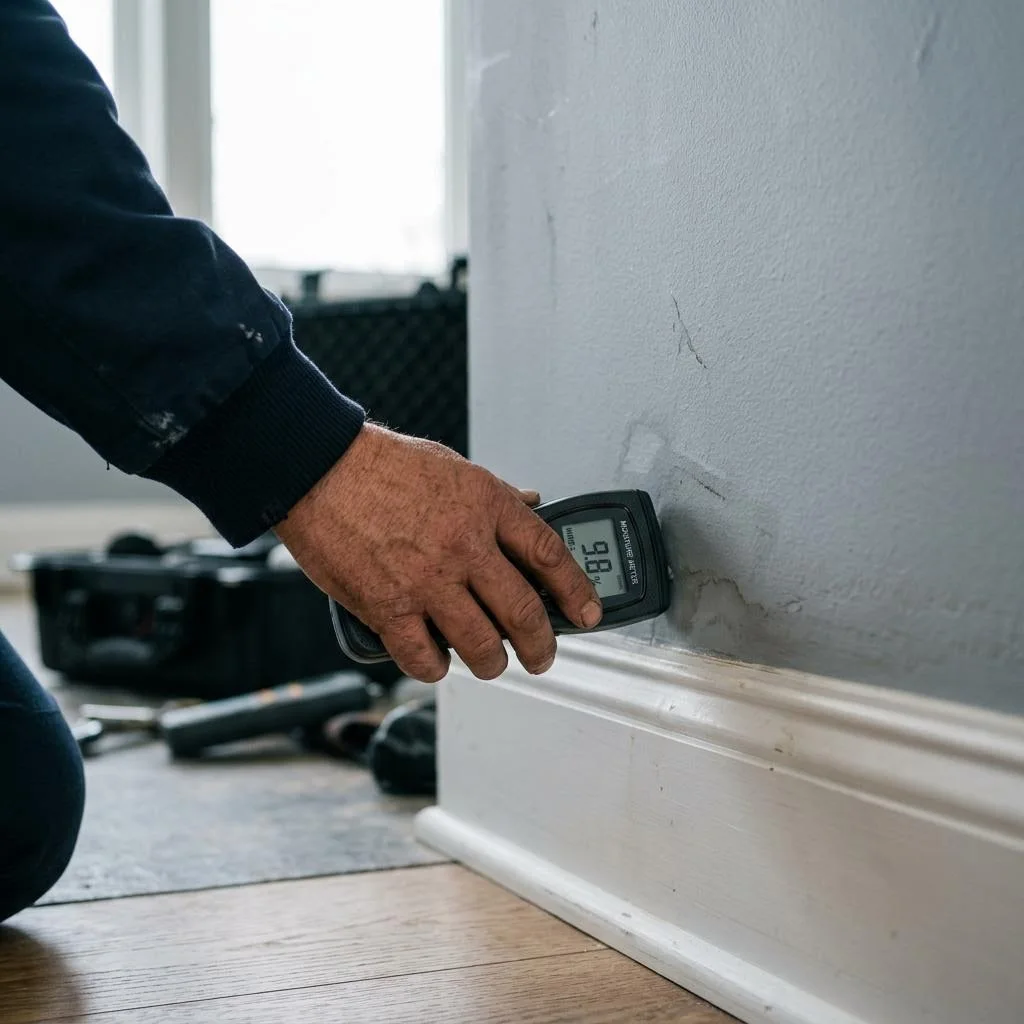
Useful records explain what you discovered and what work occurred. They do not guarantee coverage. Do not enter a hazardous area for evidence or delay appropriate safety action to complete a checklist.
Record the event without guessing
Note the discovery date and time, observed water source, affected rooms and any uncertainty. Keep safe photographs that show context as well as detail. Avoid changing the description to match what you hope a policy covers.
Keep work and source-repair records
Save relevant invoices, receipts, authorized work scopes, change approvals and source-repair information. Ask the provider which assessment, moisture and drying records are available for the work performed. Keep copies in a secure location rather than posting them publicly.
Ask your carrier what is required
Confirm reporting procedures and documentation needs with your insurer. Ask about items that may require inspection before disposal while not compromising safety. Do not send policy passwords, financial account details or private medical information through a contractor’s general web form.
Put the records in an order someone else can follow
Use a single folder for the discovery timeline, photographs, source-repair paperwork, work agreements and receipts. Give photos plain labels such as “kitchen doorway, before extraction” rather than editing them to exaggerate damage. Keep the original files. If you do not know when the leak began, distinguish the discovery time from the unknown start time. A simple, accurate record is easier to understand than a long account that mixes observations with guesses.
Ask for the missing parts of the work record
Before a visit ends, ask which observations, affected-area notes and progress records will be available. If a proposed scope changes, keep the explanation and the updated agreement together. Record which source repair was performed by which trade, and whether any area could not be checked. Do not describe a plumber’s repair receipt as proof that all building materials are dry. Source repair and drying answer different questions.
Keep the next conversation specific
Ask your insurer where to send documents, whether it needs original files and what information is still missing. Make a note of the date and the instructions you receive. Do not send Social Security numbers, banking information or policy login details through a service-request form. If you receive conflicting directions about disposal or inspection, seek clarification without delaying action needed for immediate safety. This checklist organizes facts; it cannot establish coverage, claim value or a settlement outcome.