
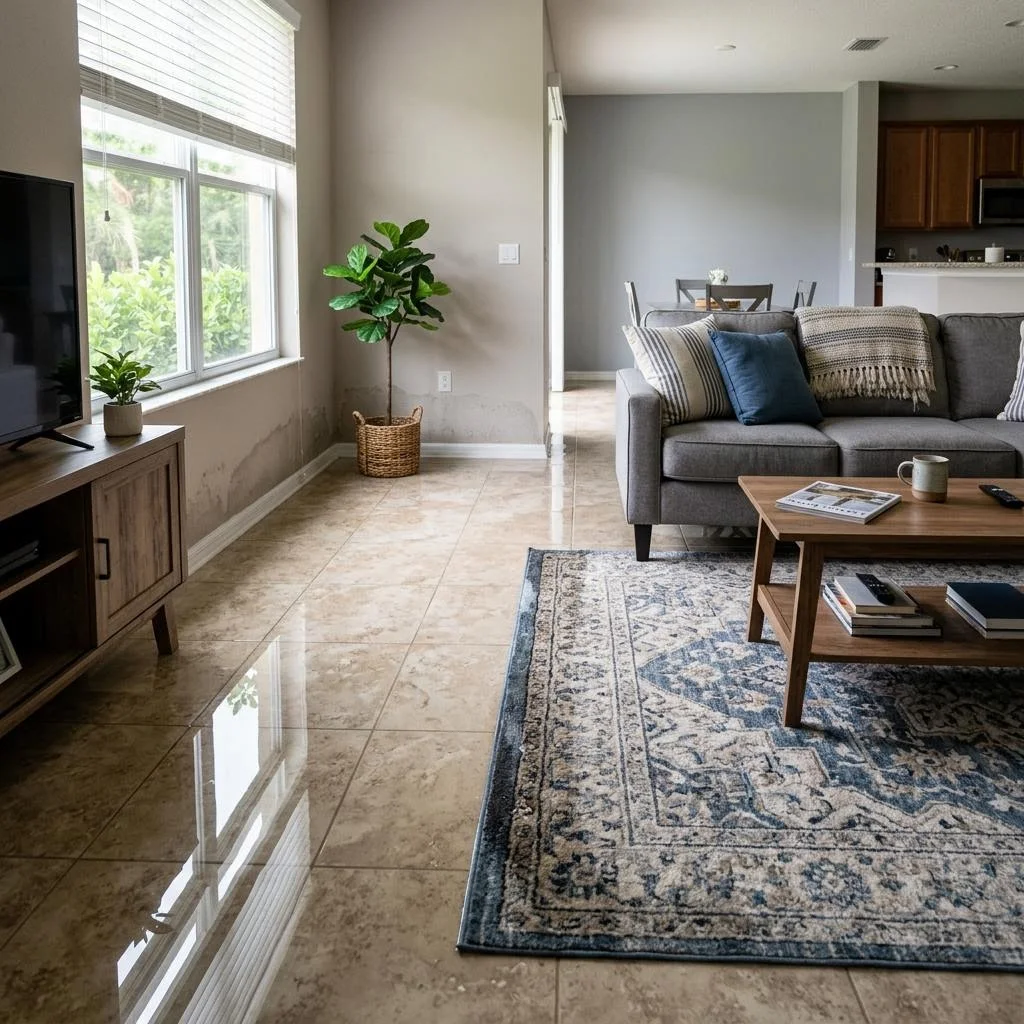
Treat an unknown toilet overflow as potentially contaminated. Keep children and pets away and avoid contact. Do not keep flushing, use ordinary fans on the affected area or assume clear-looking water is clean.
Stop adding water only if access is safe
Do not cross the overflow to reach a valve. If the normal shutoff is reachable from a dry, safe position, appropriate source control may limit further release. A plumbing professional should investigate a recurring blockage or backup. Do not test the problem with repeated flushing.
Prevent unnecessary spread
Avoid walking through affected rooms and carrying wet belongings into clean spaces. Household mopping or fragrance does not establish that contaminated materials have been addressed. Do not mix cleaning chemicals or remove porous finishes without qualified assessment.
Explain the event accurately
Report where the water appeared, whether other fixtures backed up and which rooms or floor edges were reached. Plumbing work corrects the source; cleanup and moisture assessment address the building damage. Ask how contamination affects the work scope and which areas should remain off limits.