
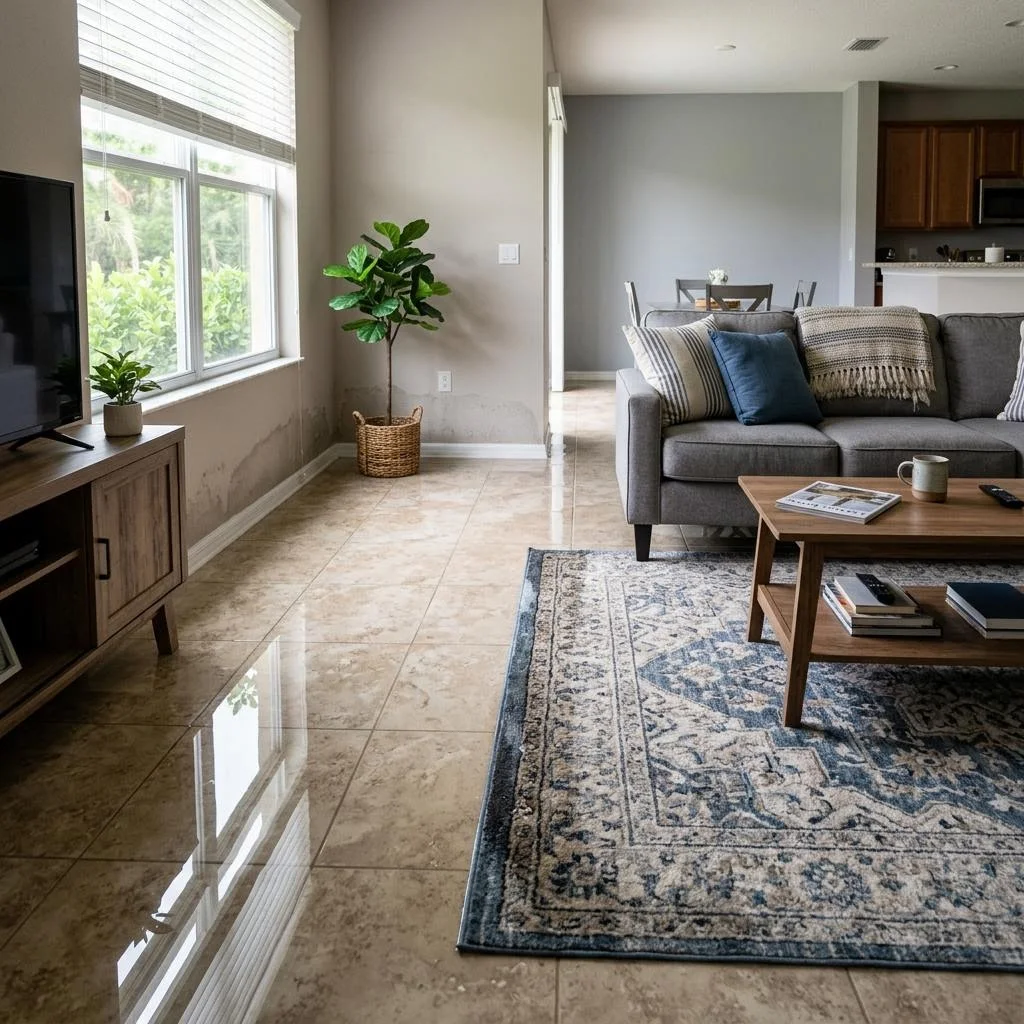
Drying depends on the conditions around wet materials as well as the materials themselves. In humid weather, opening windows can conflict with a controlled drying plan. Do not assume outdoor air will improve every project.
Ask about the drying environment
The plan may consider temperature, humidity, airflow, containment and the affected assembly. Conditions vary with weather, ventilation and the property. A regional climate description does not establish the conditions inside your particular home.
Coordinate HVAC decisions
An air conditioner can also be the water source when a system leaks. Have the system assessed by the appropriate HVAC professional. Ask how normal ventilation or HVAC operation fits with the mitigation plan rather than changing controls or introducing heat yourself.
Report changes that affect progress
Open doors, interrupted equipment, new rain entry and recurrent leaks can change the work. Tell the provider what happened and ask whether the plan needs review. Humidity alone does not decide which material can be saved or how many days drying will take.
Should you open the windows?
Not automatically. Outdoor air may bring more moisture into the room, and opening windows can interfere with a controlled drying setup. Ask the provider whether windows and doors should stay closed for your project. Do not rely on a pleasant breeze as proof that conditions are helping. Also avoid changing thermostat settings or bringing in portable heaters without discussing the plan. A comfortable air temperature and dry building materials are not the same measurement.
What to tell the person checking progress
Report an open window, an equipment interruption, a new AC problem or water appearing after another rain. Include roughly when it happened. These details help explain a change in readings without guessing that the equipment failed. If one room feels better but a baseboard still changes shape, mention both observations. Do not hide a damp edge behind furniture while work is in progress.
Plan repairs around findings, not the weather forecast
A sunny week does not establish that moisture trapped in a floor assembly has been addressed. Before new flooring or paint, ask which materials were checked, whether the source is resolved and whether any areas remain inaccessible. In Central Florida homes, air-conditioning operation, outdoor conditions and the building assembly can all affect the plan. None supports a fixed completion promise before the actual damage is assessed.